Subscribe to out newsletter today to receive latest news administrate cost effective for tactical data.

Let’s Stay In Touch

Shopping cart

Subtotal $0.00

View cartCheckout

Heart Failure

Your Hridoy can still be strong — with the right care and the right team beside you.

ShapeHeart Failure Treatment in Kolkata
Breathe Easier, Live Better

Enquiry Now

NABH
Accredited

Committed to the highest standards of patient safety, clinical excellence, and quality healthcare.

24×7 Cardiac Emergency & ICU

Immediate cardiac emergency response with dedicated ICU support, available every hour of every day.

Advanced Cardiac Care & ICU

From preventive cardiology to complex cardiac procedures, all under one roof with world-class expertise.

What Is Heart Failure

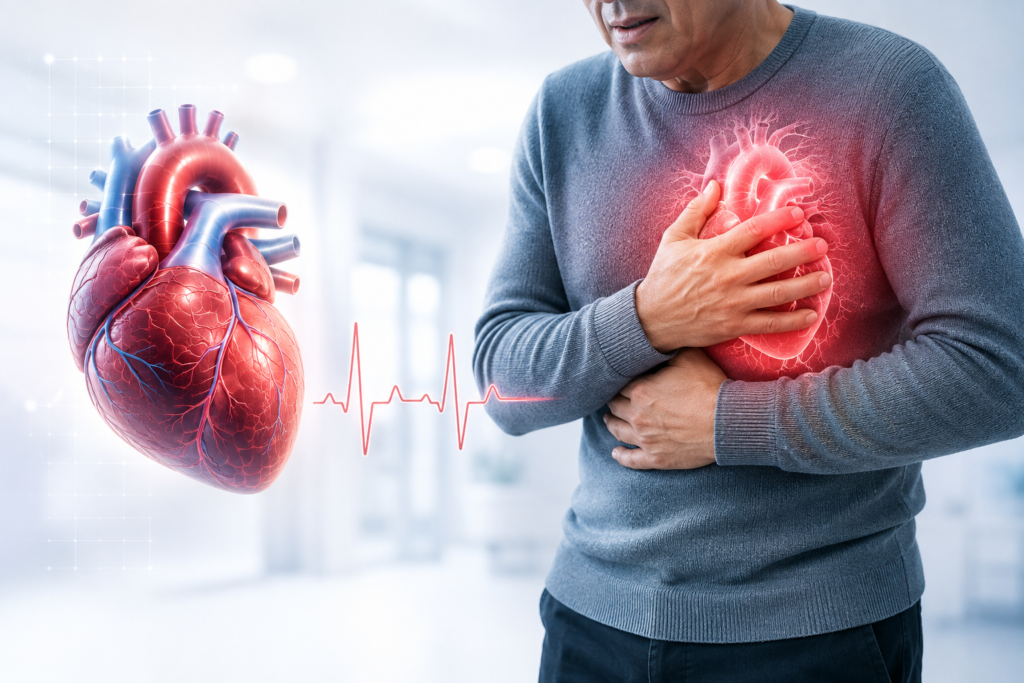
Heart failure does not mean the heart has stopped beating. It means the heart muscle has become too weak or too stiff to pump blood around the body efficiently. As a result, the body's organs and tissues don't receive enough oxygen-rich blood, and fluid begins to back up — into the lungs, causing breathlessness, and into the limbs, causing swelling.

Heart failure is a chronic condition — meaning it requires ongoing management rather than a single treatment. But with the right care, most patients can control their symptoms effectively, reduce the frequency of hospital admissions, and maintain a good quality of life for many years.

Types of Heart Failure

Heart Failure With Reduced Ejection Fraction (HFrEF)

The most common type. The heart's main pumping chamber is weakened and contracts less forcefully than it should, pumping out less blood with each beat. Often caused by coronary artery disease, a previous heart attack, or long-standing high blood pressure.

Heart Failure With Preserved Ejection Fraction (HFpEF)

In this type, the heart contracts normally but has become stiff, so it cannot relax and fill properly between beats. Less blood enters the pumping chamber, so less is pumped out. More common in older patients, women, and those with high blood pressure or diabetes.

Acute Decompensated Heart Failure

A sudden, severe worsening of heart failure symptoms — typically breathlessness at rest, fluid accumulation, and the inability to lie flat. This is a medical emergency requiring immediate hospital treatment with intravenous medications to remove excess fluid and stabilise the heart. Citadel Hospital's 24x7 cardiac emergency team manages acute decompensated heart failure promptly and effectively.

Symptoms of Heart Failure

brething

01

Breathlessness

The most common symptom. Initially occurs during physical activity, then progresses to breathlessness at rest. Many patients find they need to sleep propped up on pillows because lying flat makes the breathlessness worse — a specific symptom called orthopnoea.

swallon

02

Swollen Ankles and Legs

Fluid accumulation causes swelling — typically noticed in the ankles and feet, especially towards the end of the day. In more advanced cases, the swelling can extend up the legs and into the abdomen.

fatigue

03

Persistent Fatigue

The heart's reduced pumping ability means muscles and organs don't receive the blood flow they need to function properly, causing constant, significant fatigue even with minimal activity.

hrti

04

Rapid or Irregular Heartbeat

The heart may try to compensate for its reduced pumping efficiency by beating faster or developing arrhythmias — which patients experience as palpitations, racing, or irregular heartbeat.

process_card_3

05

Sudden Weight Gain

A rapid gain of 1 to 2 kilograms over 2 to 3 days — caused by fluid retention — is one of the most reliable early warning signs that heart failure is worsening. Our team teaches patients to monitor this and act early.

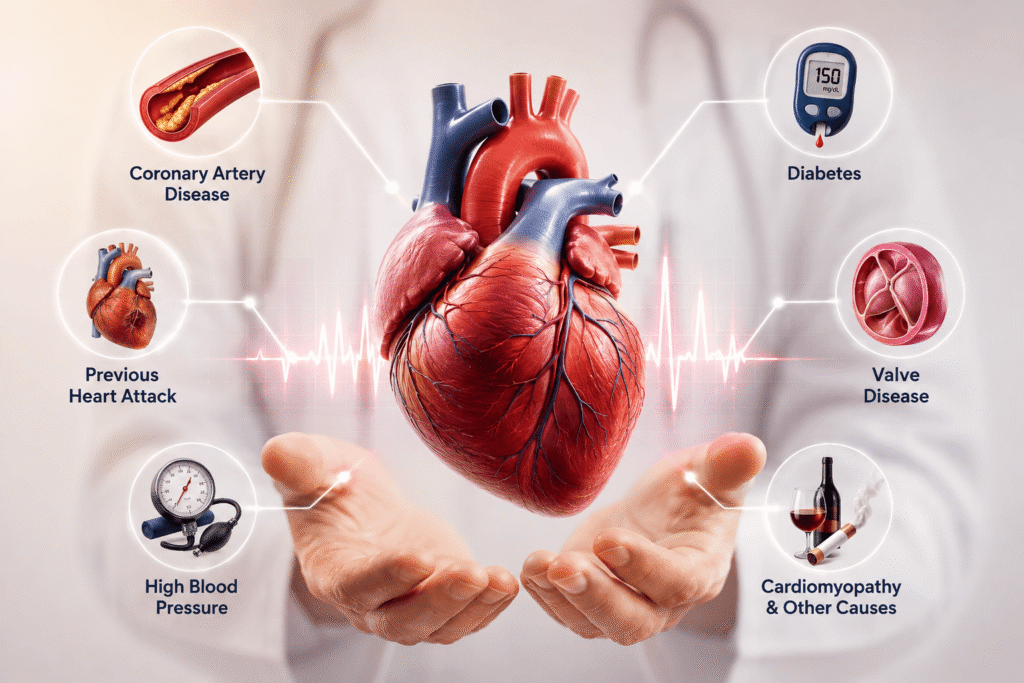
What Causes Heart Failure?

Heart failure is most commonly caused by:

How We Diagnose Heart Failure

Echocardiography (Echo)

the single most important test for heart failure. It measures the heart's ejection fraction — how much blood the heart pumps out with each beat — and assesses the heart's structure and valve function.

ECG (Electrocardiogram)

identifies any underlying rhythm abnormalities or evidence of a previous heart attack that may have contributed to heart failure.

Blood Tests

including BNP (Brain Natriuretic Peptide), a biomarker specifically elevated in heart failure, as well as kidney function, sodium and potassium levels, and thyroid function.

Chest X-Ray

shows whether there is fluid in the lungs and whether the heart is enlarged.

Cardiac MRI

provides highly detailed images of the heart muscle and is particularly useful in identifying cardiomyopathy and assessing the extent of any heart muscle damage.

All diagnostic tests are available in-house at Citadel Hospital’s Taratala facility — with prompt reporting and same-day cardiology review where needed.

How We Treat Heart Failure

Medication Management

The backbone of heart failure treatment. Our cardiologists prescribe and carefully titrate a combination of evidence-based medications — typically including ACE inhibitors or ARBs, beta-blockers, diuretics, and newer agents such as SGLT2 inhibitors — to reduce symptoms, improve heart function, and prolong life. Medication doses are adjusted regularly based on your response and tolerance.

Device Therapy

For patients whose heart failure is not adequately controlled with medication alone:
- CRT (Cardiac Resynchronisation Therapy) — a specialised pacemaker that resynchronises the heart's chambers, improving pumping efficiency and significantly reducing symptoms
- ICD (Implantable Cardioverter Defibrillator) — for patients at risk of life-threatening arrhythmias, an ICD monitors the heart and delivers a corrective shock if needed

Treating the Underlying Cause

If heart failure is caused by a blocked artery, we treat it with angioplasty or bypass surgery. If it is caused by a damaged valve, we repair or replace it. Treating the root cause — not just the symptoms — is central to our approach.

Cardiac Rehabilitation

Our structured cardiac rehabilitation programme helps heart failure patients build safe levels of physical activity, manage diet and fluid intake, understand their medications, and recognise early warning signs — reducing readmission rates and improving long-term outcomes.

Shapeget In touch

Breathless, tired, or swollen ankles? Your heart may need help.

Citadel Hospital, Taratala, Kolkata · 24x7 Cardiac Care · 033 1234 5678

ShapeWhy Patients Across Kolkata — and Eastern India

Why Choose Citadel Hospital

There are many hospitals in Kolkata. So why do patients from across West Bengal, Odisha, Bihar, and North-East India travel to Citadel Hospital for their cardiac care? The answer is a combination of clinical excellence, advanced technology, and a team that genuinely cares.

NABH
Accredited

National recognition for safety, hygiene, and clinical standards — giving you confidence before you even enter the room.

24×7 Cardiac Emergency & ICU

Our emergency cardiac team and dedicated cardiac ICU operate round the clock — because heart emergencies don't follow a schedule.

Advanced Cardiac Care & ICU

AI-assisted diagnostics, a state-of-the-art cath lab, and minimally invasive cardiac procedures — we use the best tools modern cardiac medicine has to offer.

Renowned Specialists

Experienced interventional cardiologists, cardiac surgeons, and electrophysiologists — all under one roof, all working together for your care.

Located in Taratala, South Kolkata

Easily accessible from across Kolkata and well-connected for patients travelling from neighbouring districts and states.

Compassionate, Clear Communication

We take time to explain your condition in plain language — because informed patients heal better, and anxious ones deserve answers, not assumptions.

Your Heart Failure Journey at Citadel Hospital

01

Initial Assessment

Echocardiography, ECG, blood tests, and a thorough symptom review establish your heart failure type and severity.

02

Personalised Treatment Plan

Medications are started and titrated to your specific type of heart failure, symptoms, and tolerance.

03

Device Therapy if Needed

If medications are insufficient, CRT or ICD therapy is assessed and planned with our electrophysiology team.

04

Treating the Underlying Cause

If a blocked artery, valve disease, or other correctable cause is identified, it is treated — addressing the root problem, not just the symptoms.

05

Long-Term Monitoring and Rehabilitation

Regular follow-up appointments, medication reviews, and cardiac rehabilitation support your recovery and help prevent future hospital admissions.

Shapeget In touch

Insurance and Cashless Facilities

Heart failure treatment — including hospitalisation, diagnostic tests, device implantation, and cardiac rehabilitation — is covered under most major health insurance policies, CGHS, WBHS, and corporate group plans. Citadel Hospital is empanelled with leading cashless TPA networks across India. Call or WhatsApp us at 033 1234 5678 to confirm your insurance coverage before your visit.

title_icon_2Faqs

Frequently Asked Have
Any Question?

No — heart failure does not mean the heart has stopped. It means the heart muscle has become too weak or stiff to pump blood efficiently. As a result, fluid builds up in the lungs and limbs, causing breathlessness, swelling, and fatigue. Heart failure is a serious but manageable condition — with the right treatment, most patients experience significant improvement in their symptoms.

Early warning signs of heart failure include breathlessness during mild activity or at rest, swollen ankles and feet, persistent unusual fatigue, needing extra pillows to sleep, and rapid unexplained weight gain due to fluid retention. These symptoms often develop gradually and are easy to dismiss — which is why early evaluation at Citadel Hospital, Kolkata is important. Call 033 1234 5678 to book a consultation.

Heart failure cannot always be cured, but it can be effectively managed. With the right combination of medications, device therapy (such as CRT or ICD), treatment of the underlying cause, and lifestyle changes, most patients experience a significant reduction in symptoms, fewer hospital admissions, and a better quality of life. At Citadel Hospital, Kolkata, we provide comprehensive, long-term heart failure management.

"Weak heart" is a commonly used term for what doctors call heart failure with reduced ejection fraction — where the heart muscle is weakened and pumps less blood than normal. Heart failure also includes cases where the heart muscle is stiff rather than weak, but still cannot fill or pump efficiently. Both types are diagnosed through echocardiography and managed at Citadel Hospital, Kolkata.

A CRT (Cardiac Resynchronisation Therapy) device is a specialised pacemaker used in heart failure patients whose heart's two lower chambers beat out of rhythm with each other, reducing pumping efficiency. By resynchronising the chambers, CRT improves the heart's output, reduces breathlessness, and lowers the risk of hospitalisation. It is recommended for specific heart failure patients who haven't responded adequately to medication alone.

Book a consultation at Citadel Hospital, Taratala, Kolkata by clicking "Book an Appointment" on our website, calling 033 1234 5678, or sending a WhatsApp message. If your symptoms are severe — breathlessness at rest, inability to lie flat, or sudden weight gain — please come directly to our 24x7 cardiac emergency rather than waiting for a scheduled appointment.